The Myth of the Perfect View
Choose a concert view that suits your priorities, compare the room’s listening positions and leave with a clearer sense of what made the performance feel vivid.
Where should you stand for the best concert experience? The best concert view depends on what you want from the room: a clear picture of the stage, an easy route out, space to move or a vantage point that lets you take in the audience as well.
What matters more than a clear sightline?
A view is only one part of a place in the venue. Consider how crowded it feels, whether you can stand without twisting, and how easily you can get to an aisle or quieter area if you need a break.
Check the venue’s access information before you travel if you need step-free entry, a seated option or a particular place to rest. For specific access arrangements, contact the venue directly; a floor plan may not show temporary barriers or how staff manage the space on the night.
- If a pillar or speaker blocks the stage from your position, try an open angle nearby; if no clear angle is available, choose the place where you can stand comfortably.
- If you have to crane your neck to see, test a side or rear position; if the strain remains, prioritise comfort over a view of the whole stage.
- If the crowd presses closely around you, move towards an open edge if permitted; if that area is also crowded, find a calmer spot rather than forcing through people.
- If you need a clear route to an exit or facilities, check the aisle and nearby obstacles; if the route is obstructed, ask venue staff where to stand instead.
- If standing for the show is uncomfortable, check whether seating or an accessible viewing area is available; if the options are unclear, ask the venue before choosing a floor position.
- If the sound is harsh or difficult to follow where you are, try a nearby position away from the speaker stack; if it remains uncomfortable, step back or seek help from venue staff.
There is no need to inspect every corner or keep moving in pursuit of a flawless spot. A brief check of comfort, access and view is usually more useful than repeatedly changing position.
How can you compare positions without wandering?
Before the music begins, look for a few available options: a central spot, an open area towards the rear, or a side position that does not obstruct anyone. Check each for barriers, crowding and a comfortable stance. If moving is allowed, a small adjustment can help you decide; do not push through a dense crowd to make the comparison.
Imagine you arrive to find a pillar blocking the stage from the central space. You check an open rear area and a side aisle: the rear gives you room to stand but leaves the stage partly hidden, while the aisle offers a clearer angle without blocking the route. You choose the aisle only if you can remain outside the flow of people; otherwise, you settle in the rear area and accept the limited view.
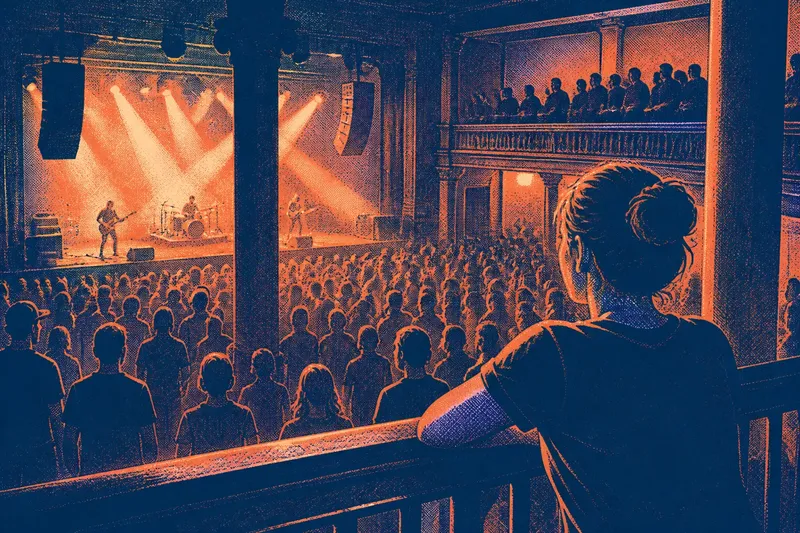
Balconies and raised areas can offer a broader view of the room, while a position near the stage brings performers closer. Neither is automatically better. Use the option that suits your comfort and the practical needs of the venue.
Which concert position suits your needs?
Is the front row always the best place to stand?
No. It can make the performers easier to see, but the crowd may feel close and the overall stage picture can be harder to take in. Choose it only if that closeness suits you and you can stand comfortably.
Can you enjoy a concert without seeing the whole stage?
Yes. A partial view does not prevent you from enjoying the sound, lighting or shared atmosphere. If seeing the performers is important to you, try another permitted position; if not, choose a comfortable place and let the rest of the room remain part of the experience.
Should you move if someone blocks your view?
If there is a nearby open space and moving will not disrupt others, make one modest adjustment. If the room is packed, stay put or ask venue staff for help rather than squeezing past people.
What should you do if the sound feels uncomfortable?
Move away from a speaker or crowded area if the route is clear and the venue allows it. If discomfort continues, step out or speak to staff; do not stay in a position that feels unsafe or painful.
What should you check before settling in?
Use a quick decision check rather than trying to predict exactly how the whole show will feel:
- If the stage is visible without leaning, stay; if not, try a nearby open angle or accept a partial view from a comfortable spot.
- If you can stand naturally, keep the position; if you are twisting or bracing, move to a place that feels easier.
- If the crowd leaves room to move, stay; if it feels too dense, shift towards an open edge or ask staff for guidance.
- If the route to an exit is clear, note it and settle; if it is blocked, choose another permitted position or ask staff.
- If you can hear comfortably, remain; if the sound feels harsh, move away from the speakers or take a break.
- If the position meets your access needs, stay; if it does not, contact venue staff about an appropriate alternative.
These checks are not a promise of a perfect experience. They help you choose a workable place and decide what to change if it stops working for you.
How do you handle a limited view?
Let go of the idea that you must see every performer. Enjoy the parts of the event that remain available from your position: the sound filling the room, the lighting, or the audience’s movement. If a better angle opens nearby, take it only when you can move without disturbing others.
It is not worth spending the whole show searching for a flawless view. Repeatedly crossing a crowded floor can be tiring and distracting; make a considerate adjustment, then settle where you feel comfortable.
What should you remember about the best concert view?
After the show, note what made your position work or fall short: perhaps the aisle gave you space, a pillar obscured the stage, or the rear of the room felt calmer. That specific detail can help you choose a better starting point next time.
The best concert view is the one that fits the room and your needs on the night. Before your next show, check the venue’s access information, choose a comfortable position and keep one alternative in mind if the first spot does not work.